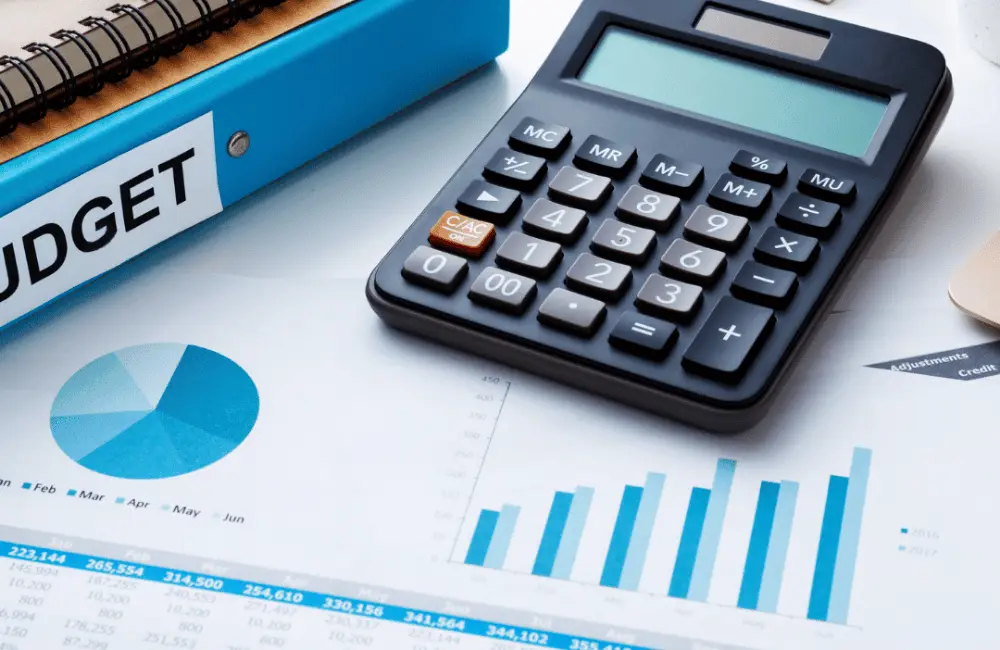
Between fixed expenses, unforeseen events and purchases "to please yourself" or "to please others", it's not always easy to manage your finances. Whatever your monthly income, it's essential to learn how to manage your money better. With these few tips, you can be sure of achieving long-term financial independence.
Why is it essential to learn how to manage your finances?
Contrary to popular belief, it's not just the "rich" who need to learn how to manage their finances. Whatever the total amount in your bank account, it's how you manage your money that will help you avoid life's difficulties. So, even if you don't earn much, but have total control over your spending, you'll live comfortably, have the right skills to achieve your goals and won't encounter any financial difficulties. On the contrary, even if you earn a lot of money, but don't have total control over your spending and cash inflows, you'll quickly find yourself in the red. It's all in the management, not the amount.
The keys to sound financial management
It's time to regain total control over your finances! Here are a few tips to help you manage your money better and optimize your spending more efficiently:
Cash receipts > Cash disbursements
This is one of the golden rules for better financial management: always make sure that more money comes in than goes out. This is the only way to avoid turning your bank account red. With this in mind, you need to learn to differentiate between "assets" and "liabilities". An asset is an expense whose value increases over time and can generate income. A liability, on the other hand, is an expense whose value diminishes over time. So you see: maximize purchases of assets and minimize, as far as possible, purchases of liabilities.
Clearly identify fixed costs
Whether your salary is fixed every month or not, it's important to have a clear idea of your fixed monthly expenses. In most cases, this is the main mistake made by employees and self-employed people alike. You can't just make an "estimate" by eye. You really need to do the math and clearly identify the fixed amount you have to pay every month. If your fixed expenses exceed 70 % of your total expenses, you need to make a few changes to get back into balance. Ask yourself this question: is this lifestyle really suited to my income? If not, correct the situation quickly, before it cripples you in the long term. Here are the steps you need to go through to make an accurate budget estimate:
- Take 1 paper and 1 pen
- List all cash inflows in one section
- List all expenses in a separate section
- Make a clear distinction between fixed and variable costs
- Set a monthly savings target
- Eliminate unnecessary expenses
- Subtract cash inflows from cash outflows
You need to keep your feet on the ground. The budget must not only be as precise as possible, but also as realistic as possible.
Monthly expenses
Do you receive a monthly salary? Then why not monthlyize your expenses as much as possible? It's sometimes tempting to postpone deadlines in order to better cope with occasional financial difficulties. But that's precisely how you lose sight of your expenses. By monthlyizing all your fixed expenses, you'll be able to keep precise control over your spending and even better achieve your objectives. It also helps you avoid stress when deadlines are fast approaching. If you can, take care of all expenses at the beginning or end of the month.
Save your money!
What are savings? It's a sum of money stored in secure savings accounts. We don't always think about it, but savings are a fundamental (if not the most important) tool for better financial management. What will you use that part of your money that won't be immediately consumed? There are different types of savings:
- Precautionary savings: to help you cope with the hazards of life
- Constrained Provision Savings: for non-monthly expenses
- Project savings: the sum you need to finance your projects
- Reserves: a sum to be touched only if really necessary
The amount to save depends entirely on each individual case. However, it is recommended to save between 10 and 15 % of your income. If you can, you can even do more.
Use budget management tools
Keeping a constant eye on your budget is therefore essential. Unfortunately, you don't always have the time to devote to keeping track of your budget. The good news is that there are tools available to do the job for you. You can, in fact, use specialized tools and applications. Thanks to these budget management tools, you can: categorize your expenses, receive an alert each time money comes in or goes out, calculate your expenses more efficiently, track budget trends via a graphic display, have a real-time overview of the money you have left, identify your fixed and variable expenses more clearly, etc.
The FastBudget application
Since you can install the applications on your smartphone, you can be sure of always keeping an eye on your budget. Wherever you are, whenever you want, you can mark your cash outflows. A highly effective way to better manage your finances. At Lica, we find that the application FastBudget is ideal for easy budget management!
Managing your finances in conclusion...
Before making your credit with LicaAsk our operators for advice to ensure a sound budget. At Lica, we're committed to responsible lending and offer you a no-obligation deal at very attractive terms. What's more, you can receive a cashback up to CHF 5'000.- with your financing. This guarantees you neutral advice and the best conditions in Switzerland. Apply discreetly for new financing or to buy existing financing. You'll save money and benefit from great conditions!