The residual value is a central concept in Swiss leasing and automotive financing. It directly influences monthly payments, total cost, and end-of-lease contract decisions. However, many drivers focus primarily on the advertised monthly payment. This can hide future fees, usage restrictions, or an unpleasant surprise upon return. This article explains the mechanism, the pitfalls, and possible alternatives, such as Car loan or private credit.
What is residual value in car leasing?
The residual value of a lease corresponds to the estimated value of the vehicle at the end of the contract. It is set from the start, based on several criteria. It serves as the basis for Financial calculation of leasing.
However, be aware. This value does not always correspond to buyback price final. It also doesn't necessarily reflect the real value of the vehicle on the Swiss used car market.
Concepts not to be confused
Several terms look similar, but they don't have the same role.
- The contractual residual value is the estimate.
- The market value corresponds to the actual possible price on the used market.
- The buyback price is the amount requested to keep the car.
- The trade-in value is the offer made by a dealership.
- The balance to finance is the remaining amount if you wish to keep the vehicle.
How does the residual value affect lease payments?
Leasing primarily finances the estimated depreciation of the vehicle during the contract term. Therefore, a high residual value reduces the amortized portion. The monthly payment thus appears lower.
Conversely, a low residual value often increases monthly payments. However, it can also reflect a more conservative estimate. The rate, the down payment, the duration, and the mileage complete the calculation of the lease and the total cost.
A cost estimate in CHF to illustrate the impact on the budget
Take a vehicle costing CHF 40,000. If the expected residual value is CHF 22,000, the amortised portion is CHF 18,000. If it is CHF 16,000, the amortised portion rises to CHF 24,000.
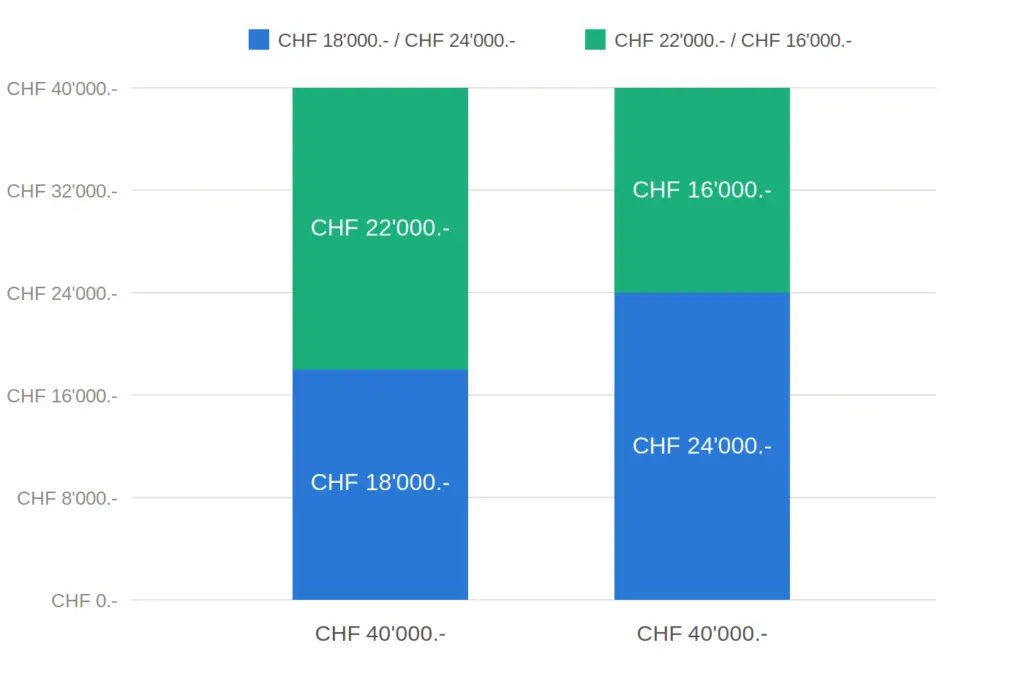
In the second case, the monthly payment will generally be higher. This example remains simplified. It does not take into account interest, fees, insurance, and Conditions specific to car leasing.
What factors determine a car's residual value?
The residual value of a car depends on many factors. The main ones are the make, model, engine, list price, and projected depreciation.
The contract duration, annual mileage, and expected vehicle condition also play an important role. In Switzerland, demand for the second-hand market also influences the residual value. Equipment, energy, environmental standards, and maintenance history can alter the estimate.
What happens at the end of a lease contract?
At the end of the lease, you generally return the vehicle to the dealership or leasing company. An expert will inspect the condition. They then check the mileage. The dealership may then charge fees in case of damage, excessive wear, or exceeding mileage.
According to the contract, a buyout, extension, or vehicle change may be possible. Therefore, the conditions must be verified before the expiration date.
Is the residual value the buyback price of the vehicle?
The residual value can serve as the basis for the buy-back price. However, it does not always guarantee it. The final price depends on the contract, the dealership, the vehicle's condition, and the agreed-upon terms.
The driver doesn't always automatically become the owner or have priority. Therefore, we advise you to ask a buyback offer Claire.
Leasing traps related to residual value
An attractive monthly payment can be based on a high residual value. This makes the offer appealing, but not necessarily cheaper overall.
Other pitfalls exist. The annual mileage can be underestimated. Overage fees can then be substantial. The return can also incur costs for tires, rims, bodywork, maintenance, or mandatory services.
In Switzerland, comprehensive insurance is often required. Furthermore, early termination It can be expensive. Finally, the driver uses the vehicle, but does not own it.
Why a low monthly payment isn't enough to judge an offer
You need to compare the monthly payment, the down payment, the duration, the interest rate, and the potential high residual value. You also need to factor in ancillary fees, end-of-contract costs, and usage restrictions.
Comparing two leases solely based on the monthly payment can therefore be misleading. A comparison with a car loan can bring more clarity.
Leasing or car credit in Switzerland: what are the differences for financing your vehicle?
With a lease, you use the vehicle without owning it. With a car loan, you become the owner as soon as you purchase it. This difference changes a lot of things.
Car credit often offers more freedom. You can resell the car, keep it, and drive without contractual mileage limits. Leasing may be suitable if you want to change vehicles regularly. However, car credit can be clearer for controlling the total cost. Its approval always depends on creditworthiness and Swiss regulations, especially The LCC.
Comparative table to anticipate between leasing and car credit
- Property: Lease, for use only. Car loan, ownership upon purchase.
- Mileage: limited lease. More flexible car financing.
- Return fees: possible with leasing. Absent with classic car financing.
- Resale: leased, with buy-out option. Available with car loan.
- Residual value: central to leasing. No standard contractual residual value in auto credit.
- End of contract: return or repurchase for leasing. Vehicle already acquired with credit.
| Criteria | Car leasing | Car loan |
|---|---|---|
| Vehicle ownership | Vehicle usage during the contract, without automatic ownership. | Ownership upon purchase, subject to financing conditions. |
| Residual value | Key element for calculating monthly payments and contract termination. | No standard contractual residual value. |
| Monthly payments | Often lower if the residual value is high. | Dependent on the amount borrowed, the duration, the rate, and solvency. |
| Mileage | Limited by contract, with potential fees for exceeding limits. | Free, without a mileage limit imposed by the funding. |
| End of contract | Restitution, repurchase, or extension according to the stipulated conditions. | The vehicle has already been acquired and can be kept or resold. |
| Return fees | Possible causes: damage, excessive wear, tires, rims, or maintenance. | No restocking fees related to financing. |
| Vehicle resale | Framed, as the driver is generally not the owner. | Free, according to the market value of the vehicle. |
| Insurance | Helmet often required in Switzerland. | Generally more flexible choice, depending on the vehicle and lender. |
| Adapted if | You want to change cars regularly and accept the constraints. | You want more freedom, to keep the vehicle, or to control the total cost. |
Financing the residual value to buy out your lease
If you want to keep your car, you can consider financing the residual value or the buyback price. A car loan or personal loan can allow this leasing buyout without tying up all your savings.
The feasibility depends on the budget, from solvency and Swiss legal conditions. This option must be compared with a buyback or a new lease.
When buying out a lease can be interesting
A buyback can be relevant if the vehicle is in good condition with reasonable mileage. This is also the case if the maintenance is known and regular.
Before buying a vehicle at the end of its lease, comparing the asking price with the market value and financing alternatives allows for a more transparent decision that aligns with your budget and Swiss solvency requirements.
You need to compare the residual value, buyback price, and market value. The buyback becomes more logical if you want to keep the car for several years and avoid a new lease.
How Lica Can Help with Vehicle Financing or Buying Out a Lease
Lica can analyze your financial situation and compare several options. This includes Car loan, private credit and the financing of a new or used vehicle.
Lica can also look into financing of a lease buyout when the residual value serves as a benchmark. We are looking for a suitable monthly payment, within a framework that complies with Swiss solvency requirements. This way, you avoid committing yourself solely to an attractive monthly payment.
Questions to ask before signing or buying out a lease
- What is the projected residual value in the contract?
- How was the annual mileage estimated?
- What fees are expected upon return?
- Is the buyback price fixed or only indicative?
- What is the difference with market value?
- What is the cost of early termination?
- What is the total cost of leasing?
- Would a car loan be more suitable for the actual need?
- The budget Is it still bearable with insurance, maintenance, and ancillary costs?
Conclusion regarding residual value
Residual value is a central element of leasing, buybacks, and car financing. It influences the monthly payments, but is not enough to evaluate an offer.
You should plan ahead for early termination fees, mileage limits, and usage restrictions. Depending on your goals, an auto loan may offer more flexibility. If you’d like to buy out your lease, Lica can help you compare your options and find the right financing solution.